

Introduction
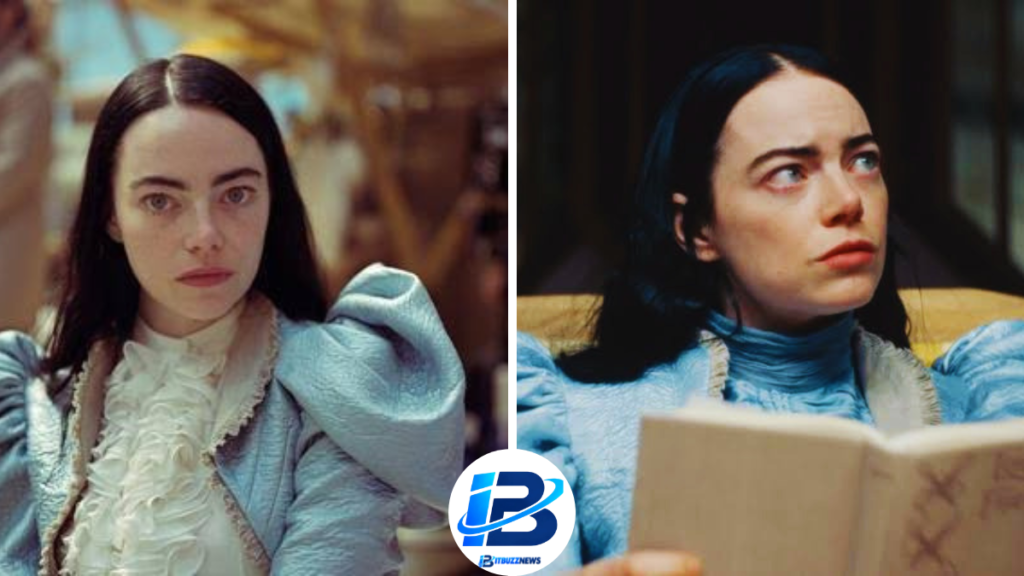
Emma Stone Poor Things performance in Poor Things is one of the most distinctive roles of her career. Released in 2023, the film brought together unusual storytelling, striking visual design, dark comedy, and an exploration of human freedom. Stone plays Bella Baxter, a young woman whose unusual journey challenges conventional ideas about identity, morality, relationships, and personal independence. Her performance earned widespread critical acclaim and established the film as one of the most memorable projects of her career.
Directed by Yorgos Lanthimos, Poor Things is based on the 1992 novel by Scottish writer Alasdair Gray. Rather than following the structure of a traditional romantic drama or coming-of-age story, it creates a surreal world in which scientific experimentation becomes the starting point for a larger discussion about society and human behaviour. Bella’s development drives the narrative, allowing the audience to experience the world through her increasingly independent perspective.
The connection between Emma Stone Poor Things and Poor Things goes beyond her leading role. Stone also served as a producer, helping bring the ambitious project to the screen. Her involvement reflects a creative partnership with Lanthimos that had already developed through earlier work. The result is a film that combines an unconventional character study with a visually imaginative cinematic experience.
What Is Poor Things About?
Poor Things follows Bella Baxter, a woman who returns to life through an extraordinary scientific experiment conducted by Dr Godwin Baxter, played by Willem Dafoe. Godwin, a surgeon with an unusual appearance and a complicated personal history, takes responsibility for Bella as she begins developing her understanding of the world. Although she has an adult body, her mind initially functions in a childlike way, creating a distinctive starting point for her personal development.
Bella’s early experiences are shaped by curiosity rather than the social expectations that typically influence adults. She learns through observation, experimentation, and direct encounters with unfamiliar situations. Instead of automatically accepting the rules imposed by other people, she questions them and discovers that many accepted behaviours are based on power, convention, or fear. This approach gives the story both its humour and its philosophical depth.
As the narrative progresses, Bella leaves the protected environment in which she was raised and begins exploring the wider world. Her travels introduce her to different cultures, relationships, economic inequalities, and conflicting ideas about freedom. Each experience changes her understanding of herself. The film uses this journey to examine how people develop their identities and whether genuine independence is possible in a society that constantly attempts to define them.
Emma Stone Poor Things as Bella Baxter
Emma Stone Poor Things plays Bella Baxter with a combination of physical energy, emotional openness, and carefully controlled comic timing. The character is unusual because her development does not follow a conventional path. Bella initially approaches ordinary activities with an uninhibited curiosity, often behaving in ways that surprise or unsettle the adults around her. Stone makes these moments entertaining without losing sight of the character’s underlying vulnerability.
One of the most impressive aspects of the performance is the way Stone communicates Bella’s changing awareness. Her movements, facial expressions, speech patterns, and reactions evolve as the character gains experience. Early scenes emphasise impulsiveness and discovery, while later moments reveal a more developed understanding of other people and the structures governing their lives. These changes help the audience follow Bella’s growth without relying entirely on dialogue.
Stone also avoids presenting Bella as a simple symbol of innocence or rebellion. The character can be selfish, impatient, compassionate, intelligent, and confrontational. Her decisions sometimes create problems, but those mistakes are part of her learning process. By allowing Bella to remain complicated, Stone gives the film an emotional centre that makes its more fantastical elements easier to connect with.
How Emma Stone Poor Things Prepared for the Role
Playing Bella required Emma Stone Poor Things to approach performance in a highly physical way. Because the character develops rapidly, Stone needed to communicate different stages of awareness through movement and behaviour. Bella’s early physicality is deliberately unfamiliar, reflecting her limited experience of the world. As she becomes more confident, her posture, gestures, and interactions gradually change.
The film’s distinctive style also required careful coordination between the acting and the production design. Lanthimos created an exaggerated environment filled with unusual architecture, imaginative costumes, and dreamlike landscapes. Stone’s performance had to feel believable within this artificial world while preserving the sense that Bella was discovering everything for the first time. Her commitment to the character helps unite these contrasting elements.
Another important part of the preparation involved understanding Bella’s emotional independence. The character does not simply seek approval from the people around her. Instead, she develops her own opinions through experience, including experiences that other characters consider inappropriate or unacceptable. Stone approaches this independence without making Bella emotionally distant. Her curiosity and willingness to challenge authority remain connected to a genuine desire to understand life.
Emma Stone Poor Things and Director Yorgos Lanthimos
Poor Things marked another major collaboration between Emma Stone Poor Things and director Yorgos Lanthimos. Their earlier work together on The Favourite demonstrated their shared interest in unusual characters, dark humour, and stories that challenge familiar social conventions. Stone’s performance in that 2018 period comedy earned an Academy Award nomination for Best Supporting Actress, helping establish a creative partnership that continued to develop.
Lanthimos is known for his distinctive filmmaking style, which often combines carefully composed visuals with uncomfortable humour and unconventional dialogue. His films frequently examine how individuals respond to social systems that restrict their choices. In Poor Things, these themes become part of a fantastical coming-of-age narrative, with Bella’s personal experiences exposing the contradictions of the world around her.
Stone’s collaboration with Lanthimos works particularly well because the film requires an actor who can balance absurdity with emotional sincerity. The story frequently places Bella in situations that are funny, unsettling, or difficult to interpret. Stone responds to these shifts without making the character feel inconsistent. Her performance helps maintain the film’s unusual balance between satire and emotional development.
Why Poor Things Looks So Different
The visual identity of Poor Things is central to its storytelling. The film uses elaborate sets, unusual camera perspectives, vivid colours, and carefully constructed costumes to create a world that feels both recognisable and impossible. Rather than aiming for historical realism, the production design presents an exaggerated version of reality that reflects Bella’s changing understanding of her surroundings.
Cinematographer Robbie Ryan helped establish the film’s distinctive visual language. Wide-angle lenses and unusual framing make familiar spaces appear strange, particularly during Bella’s early experiences. As she travels beyond her original environment, the locations become more varied and visually complex. The result reinforces the idea that the world is being discovered rather than simply observed.
The costumes designed by Holly Waddington also contribute to Bella’s development. Her clothing changes throughout the film, reflecting her growing independence and willingness to experiment with identity. The designs combine historical influences with imaginative shapes and textures, making them feel appropriate to the film’s alternative Victorian setting. Together, the costumes, sets, and cinematography turn Bella’s journey into a visual expression of personal discovery.
The Themes Behind Emma Stone Poor Things Character
One of the central themes of Poor Things is the meaning of freedom. Bella begins her journey without many of the assumptions that shape other people’s behaviour. As she encounters social rules, financial inequality, and expectations surrounding relationships, she starts to understand how those structures influence individual choices. Her responses challenge the idea that traditional expectations should automatically determine how a person lives.
The film also explores the relationship between knowledge and experience. Bella does not learn everything through formal instruction or advice from authority figures. Instead, she develops her understanding through direct encounters with people and situations. Some experiences are rewarding, while others expose cruelty, exploitation, or hypocrisy. This process makes her development more complicated than a simple progression from innocence to wisdom.
Another important theme is bodily autonomy. Bella’s body and personal choices become subjects of interest to the people around her, who frequently attempt to control her behaviour. Her determination to make decisions for herself becomes an essential part of the story. Through Bella, the film questions why society often treats women’s independence as something that requires supervision or permission.
Emma Stone Poor Things Award-Winning Performance
Emma Stone Poor Things work in Poor Things received substantial recognition during the 2023–2024 awards season. Her portrayal of Bella Baxter earned the Academy Award for Best Actress at the 96th Academy Awards in March 2024. The win was a major milestone in a career that had already included several acclaimed performances across comedy, drama, and musical film.
Stone’s success was especially notable because Bella is such an unconventional leading character. The role demands physical comedy, emotional vulnerability, dramatic intensity, and a willingness to embrace behaviour that might initially seem strange. Stone brings these qualities together while maintaining a clear sense of the character’s development. Her performance makes Bella memorable without reducing her to a collection of eccentric mannerisms.
The Academy Award also recognised the broader ambition of the performance. Stone does not merely react to the unusual world surrounding Bella; she helps establish its emotional logic. The character’s curiosity, confidence, mistakes, and discoveries become the framework through which the audience experiences the story. This combination of technical control and expressive freedom is a major reason the role attracted so much attention.
Other Major Actors in Poor Things
Although Emma Stone Poor Things is the film’s central figure, the supporting cast plays an important role in shaping Bella’s journey. Willem Dafoe portrays Dr Godwin Baxter, the scientist responsible for bringing Bella back to life. His performance combines authority, eccentricity, and genuine affection, creating a character whose care for Bella is complicated by the unusual circumstances of her existence.
Mark Ruffalo plays Duncan Wedderburn, a lawyer who becomes involved with Bella during her journey. Duncan initially believes he can influence and control her, but Bella’s independence repeatedly challenges his expectations. Ruffalo’s performance brings comic energy to the film while highlighting the difference between genuine affection and possessive behaviour.
Ramy Youssef appears as Max McCandles, a medical assistant who becomes closely connected to Bella and Godwin. Other important cast members include Christopher Abbott, Jerrod Carmichael, and Margaret Qualley. Each character introduces a different perspective on power, relationships, and human behaviour. Their interactions give Bella opportunities to test her beliefs and develop a more independent understanding of the world.
Emma Stone Poor Things Role as a Producer
Emma Stone’s involvement in Poor Things extended beyond acting. She also served as a producer, working with the filmmaking team to help realise the project. Producing an ambitious film of this kind involves more than appearing on screen; it can include creative collaboration, project development, and participation in decisions that shape the finished production.
Her involvement reflects the importance of collaboration between actors and directors. A character as unusual as Bella requires a shared understanding of the film’s tone and purpose. Stone’s work with Lanthimos helped create a performance that fits the film’s visual style while remaining emotionally engaging. Their partnership demonstrates how an actor’s contribution can extend into the broader creative process.
Stone’s producer credit also places Poor Things within a wider pattern of her career, in which she has taken on projects that offer opportunities to explore unconventional characters and storytelling approaches. Her involvement in both the performance and production sides of the film adds another dimension to her contribution.
Why Poor Things Remains Memorable
The film stands out because it combines a visually extravagant presentation with questions that remain relevant outside its fictional world. Bella’s experiences raise issues surrounding gender, independence, social inequality, education, and the ways people learn to understand themselves. The fantastical setting allows the filmmakers to examine these subjects from an unfamiliar angle without turning the story into a conventional lecture.
Its dark humour is equally important. Many scenes expose the absurdity of social expectations by allowing characters to take their own beliefs to ridiculous extremes. Bella’s straightforward questions often reveal contradictions that other people prefer to ignore. The comedy therefore serves a purpose beyond entertainment: it helps the film challenge assumptions about respectable behaviour and accepted authority.
Emma Stone’s performance connects these elements. Without a convincing central character, the film’s unusual design and philosophical ideas could feel distant. Stone gives Bella a sense of curiosity and emotional progression that keeps the story engaging. Even when the narrative becomes surreal, the audience can follow the character’s desire to understand herself and make her own choices.
Frequently Asked Questions About Emma Stone Poor Things in Poor Things
What character does Emma Stone play in Poor Things?
Emma Stone plays Bella Baxter, a woman brought back to life through an extraordinary scientific experiment. The story follows her intellectual, emotional, and personal development as she explores the world and challenges social expectations.
When was Poor Things released?
Poor Things premiered at the Venice International Film Festival in September 2023 and received its theatrical release in the United States in December 2023. Its unusual storytelling and visual style helped it attract considerable attention during the awards season.
Did Emma Stone win an Oscar for Poor Things?
Yes. Emma Stone won the Academy Award for Best Actress for her performance in Poor Things at the 96th Academy Awards in March 2024. The award recognised her portrayal of Bella Baxter.
Was Emma Stone also a producer of Poor Things?
Yes. Stone served as both the film’s lead actor and a producer. Her involvement extended beyond performing the role of Bella, contributing to the collaborative effort behind the production.
Who directed Poor Things?
Yorgos Lanthimos directed Poor Things. The film is based on the novel by Alasdair Gray and features a distinctive combination of dark comedy, fantasy, social commentary, and imaginative production design.
What is the main message of Poor Things?
The film explores freedom, personal identity, gender expectations, and the importance of learning through experience. Bella’s journey challenges the idea that social conventions should determine how people think, behave, or understand themselves.
Conclusion
Emma Stone Poor Things performance in Poor Things represents a significant achievement in her acting career. As Bella Baxter, she creates a character whose curiosity, emotional development, and determination to live independently drive the film from beginning to end. Her ability to combine physical comedy with genuine emotional depth makes Bella compelling, even within the story’s fantastical setting.
The film’s success also comes from the creative partnership between Stone and Yorgos Lanthimos, the supporting cast, and the imaginative work of its production team. Its unusual visuals and provocative themes give the story a distinctive identity, while its exploration of freedom and self-discovery provides a meaningful foundation.
Ultimately, Poor Things is more than an unusual fantasy film. It is a story about discovering the world without automatically accepting its rules. Emma Stone brings that idea to life through a performance that is fearless, nuanced, and memorable, helping make Bella Baxter one of the defining characters of her career.